There’s a particular kind of excitement that happens when a student realises a plain sheet of paper can become something unexpected.
Not a worksheet.
Not “just paper.”
A book.
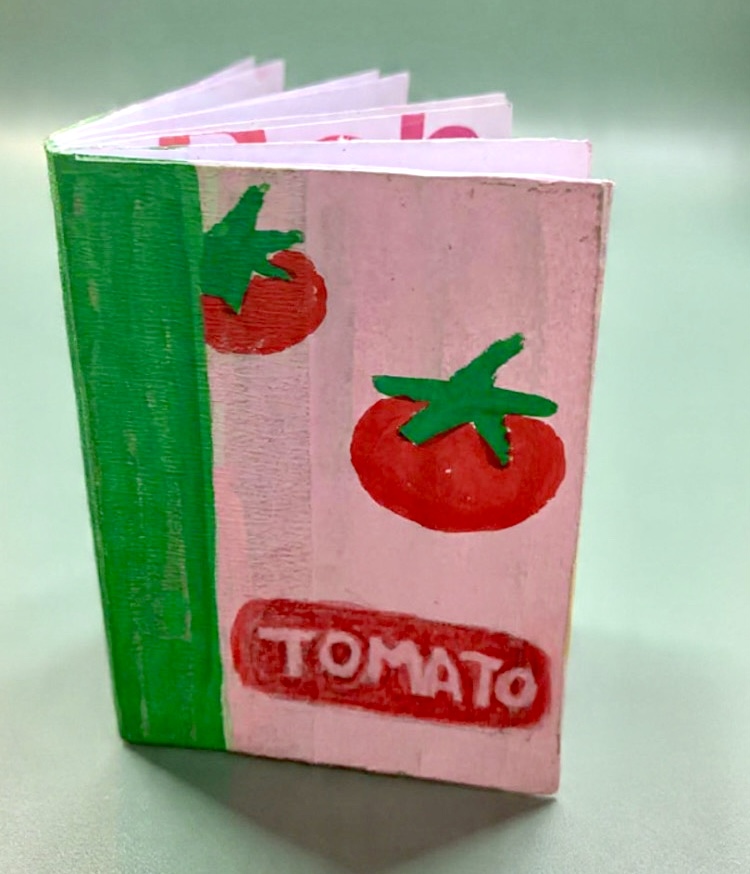
Recently we spent time in the art room transforming a single sheet of A4 paper into tiny folded zines — no staples, no glue, no fancy materials. Just folding, cutting, turning, collapsing, and experimenting until suddenly there were pages to flip through and spaces waiting to be filled.
What I love most about this process is that the construction feels almost magical. Students begin with careful folds and a few uncertain turns of the paper, and then at some point the structure reveals itself. A hidden object appears inside something ordinary.
And once the little books exist, ideas start appearing just as quickly.
Small Books Feel Possible
Large blank pages can sometimes feel intimidating for children. A big sketchbook spread asks for confidence. It asks students to “make something good.”
Tiny books change that feeling entirely.
Small pages invite play.
A miniature format lowers the pressure and encourages experimentation. Students become more willing to try unusual ideas, odd drawings, fragmented stories, invented characters, or quick visual thoughts because each page feels manageable. A mistake on a tiny page doesn’t feel catastrophic — it simply becomes part of the book.
That shift matters.
When children stop worrying about perfection, they begin thinking more creatively.
The Book Becomes a Container for Thinking
These folded zines naturally encourage sequencing and narrative thinking. Even students who don’t see themselves as “writers” begin connecting ideas from page to page.
A collection of shapes becomes a story.
A doodle becomes a character.
A colour palette becomes a journey.
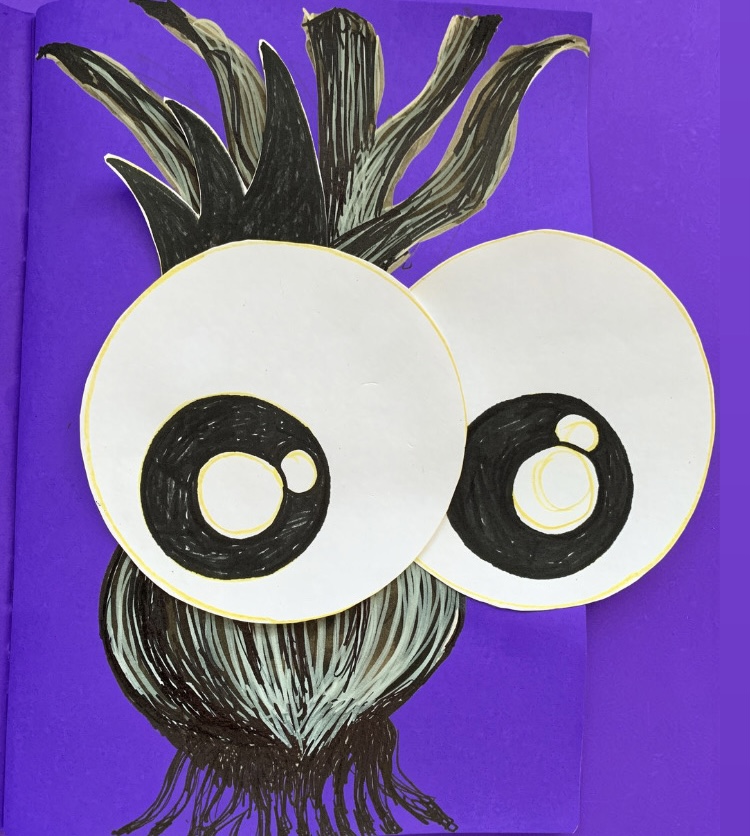
Some students create comics. Others invent field guides, dream journals, tiny museums, poetry collections, or strange visual encyclopedias. One student recently filled every page with imaginary doors and what might exist behind them.
The format quietly encourages imagination because turning pages creates anticipation. The reader wonders what comes next, and the maker begins wondering too.
There’s Freedom in Low-Stakes Materials
One of the reasons zine-making has remained such an important creative practice over the years is its accessibility.
A single sheet of photocopy paper is enough.
Children immediately understand that this is something they can recreate independently — at home, at recess, on the kitchen table, with whatever materials are nearby. That independence is powerful. Art-making no longer feels tied to special supplies or “official” projects.
The folded book says:
you can make something meaningful out of almost nothing.
And often, those limitations become part of the creativity itself.
Folding as Part of the Artwork
I also love that the physical structure becomes part of the creative thinking.
Students aren’t only drawing inside a book; they are constructing the object itself. They have to rotate it, unfold it, discover hidden spreads, and think spatially about how images connect across folds and pages.
Sometimes a drawing stretches across multiple sections. Sometimes a surprise image appears only when the book is fully opened. Some students begin treating the zine almost like a puzzle or sculpture rather than a traditional sketchbook.
The format encourages curiosity.
Tiny Books, Big Ideas
There’s something deeply satisfying about watching students hold a finished zine in their hands. Even reluctant artists often feel proud because the work feels complete and personal. The object itself carries value.
Not because it is polished.
But because it exists.
A folded paper book can hold observations, humour, secrets, questions, experiments, memories, or completely absurd ideas. It can be messy, thoughtful, chaotic, funny, quiet, or beautifully unfinished.
And perhaps that’s the best part of all.
The tiny book gives children permission to think on paper without needing everything to be perfect first.